
The short answer
To get a tattoo apprenticeship in the UK, you need to be 18 or over, have a portfolio of your own artwork, and find a studio willing to teach you. Each one is arranged directly with the studio, and many are unpaid at the start. If you can't find one, or can't go months without pay, a short in-person course is the faster route.
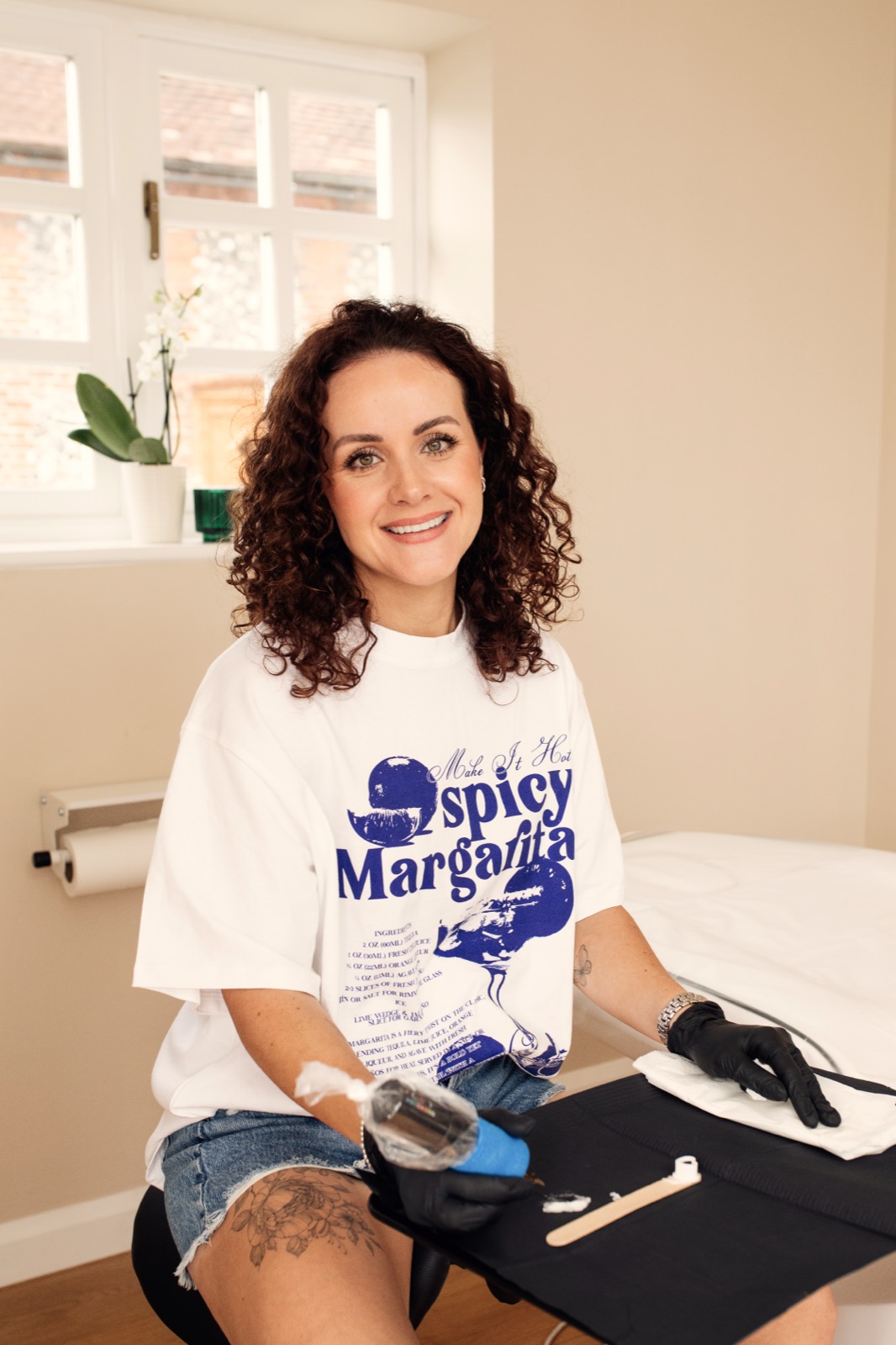
The route I teach. My Beginners Training is four days of fine line, in a group of no more than three. You tattoo real models from day three and go home with a full professional kit and support for life. It's £4,497 inc VAT, and finance is available.
What is a tattoo apprenticeship in the UK?
It's training inside a working studio, under an experienced artist who agrees to mentor you. There's no national apprenticeship standard for tattooing in the UK. Each studio sets its own terms: how long it lasts, whether you're paid, and when you start tattooing.
When I checked in October 2026, the National Careers Service said it couldn't find any apprenticeship vacancies in England for a tattooist and body piercer. So a tattoo apprenticeship is a studio's own arrangement, and you won't find one on the government's apprenticeship site.
What is a tattoo apprenticeship like?
The early weeks are mostly the studio side of things: drawing, cleaning, setting up and breaking down, sterilisation and health and safety routines, looking after clients and watching the artists work. The tattooing comes later, when your mentor decides you're ready.
How do you get a tattoo apprenticeship?
You go to studios with a portfolio and ask. These are the steps I'd follow if I were going that way.
- Build a portfolio of your own artwork. The National Careers Service lists "a portfolio of your own artwork and design ideas" as one of the things you need. It's what a studio judges you on.
- Pick studios whose work you'd want to make. If you want to do fine line, look for studios where fine line is a big part of what they do. A studio that mostly does bold traditional work won't teach you the style you're after.
- Get known there first. Get tattooed there, follow the artists, go to their events. It helps if they've met you before you ask.
- Go in person with your portfolio. Pick a quiet moment between clients. Keep it short: who you are, why their studio, and your portfolio in your hand.
- Ask the real questions before you say yes. How long will it last? Will you be paid, or is there a fee? When will you start tattooing? What happens at the end?
- Be ready to start on the desk. The National Careers Service says you might be able to start as a customer service assistant in a studio, answering enquiries and booking appointments.
Where to look for a tattoo apprenticeship near you
- Studios' own websites and InstagramSome studios have an apprenticeship page or put a call out when they're looking. Most never advertise at all.
- Job sitesSearch "tattoo apprenticeship" plus your town on Indeed UK. Read the listing carefully, because some results are general apprenticeships with nothing to do with tattooing.
- Local Facebook groupsStudios near you sometimes post there when they have a place.
- Your own tattoo artistIf you've been tattooed by someone you like, they're the easiest person to ask.
Do you get paid for a tattoo apprenticeship?
Often not, at least at first. Pay is up to the studio, and many apprentices earn little or nothing for months. Most need savings or another job to get through it. Ask about money before you agree to anything, and get it in writing.
Can an apprentice work 40 hours a week?
The hours are up to the studio. What matters more is whether you're paid for them. GOV.UK lists apprentices among the workers entitled to the National Minimum Wage, and lists people on work experience or shadowing as not entitled. An informal studio arrangement can fall on either side, so ask what you're being offered.
How long does a tattoo apprenticeship take?
There's no fixed length, because each studio sets its own. Many run for one to two years or more, and you might do very little tattooing for the first few months.
How long it takes to learn to tattoo is a different question. That depends on how much real skin you get and how often you practise. On my Beginners Training you tattoo live models on day three, and the learning carries on as you take clients. Most of my students feel confident working on their own within six to twelve months, depending on how often they're tattooing.
How old do you have to be?
18 or over. The National Careers Service lists being over 18 as a requirement for working as a tattooist, and it's an offence to tattoo anyone under 18 in England, Wales and Scotland. At 16 you can start building a drawing portfolio, but not a tattoo apprenticeship. There's no upper limit. Lots of the women I train are changing career, and plenty are in their 30s and 40s.
How difficult is it to get a tattoo apprenticeship?
Hard, for most people. Far more people want apprenticeships than studios are willing to take on, and it asks a lot of you: months of little or no pay, hours in the studio, and no promise of a job at the end.
Apprenticeships can still be a good route for the right person, and some brilliant artists have come up that way. If you've got children, a mortgage or a job you can't drop, it's a lot harder to make work. That was me. For years, I thought tattooing was something other people did. People who were naturally artistic, more confident, younger, in an apprenticeship. I started with no tattoo experience, two children at home and plenty of self-doubt. And I've had conversations with women where finding an appropriate apprenticeship felt impossible.
Why do so many women choose a course instead?
Because a course doesn't depend on a studio choosing you. You pick the date, you know the price up front, and you're tattooing real skin within days. Here's how the two compare on the things women ask me about most.
- When you tattoo real skinOn an apprenticeship, when your mentor decides, which can be months in. On my course, day three.
- Who decides you can startOn an apprenticeship, the studio. On a course, you do. You book a date.
- What it costs youAn apprenticeship often has no fee, but it can mean months without pay. My Beginners Training is £4,497 inc VAT, with a £500 deposit to secure your place and finance available, including 0% APR over 12 months, subject to status.
- What you leave withOn my course: an IBA-accredited certificate, recognised by at least 7 major insurers, a full professional kit and machine to keep, and everything you need to register with your council and start.
The National Careers Service makes a fair point here. It says private courses don't make you fully qualified, and that you'll need "hands-on, supervised experience" afterwards. That's why my training carries on after the four days. You get a lifelong WhatsApp community, a 1:1 Progression Session three months after you train, a Business Launch Plan and a 30-Day Content Plan.
What happens after the course?
About 60% of the women I've trained go on to tattoo professionally. Some of my students have done over 100 tattoos in less than four months. Students typically make their course fee back within three to six months of taking paying clients. It depends on what you do afterwards, which is why the business support is part of the course.
Sophie Dean came to me in her mid-40s with no tattoos of her own. She'd wanted to tattoo since university, but when she graduated in the early 2000s there was no visible route in for someone like her. She trained in June 2025, built up her clients on Fridays and Saturdays, and handed in her notice at her corporate job eleven months later. In her words: "Being in my mid-40s and saying, right, I'm just going to change my life, and I'm going to do it in a year. And I have." Read Sophie's story
Once you've trained, your portfolio is the tattoos you do. I've written about building a tattoo portfolio that gets you booked.
What are the alternatives to a tattoo apprenticeship?
There are five main routes into tattooing in the UK in 2026. Here they are side by side, with my own course on its own row so you can see exactly where it sits.
| Route | When you tattoo real skin | How long | What it costs you | Paid while you learn? | What you leave with |
|---|---|---|---|---|---|
| Studio apprenticeship | When your mentor decides, often months in | Set by the studio, often one to two years or more | No fee, usually, but months of little or no pay | Often not at first | Studio experience, and sometimes a job there |
| Studio assistant first | Only if it turns into training | Open-ended | Nothing | Yes, it's a job | A way in, with no promise of training |
| Ofqual-regulated Level 3 diploma | Check with the provider | Set by the provider | Set by the provider | No | A regulated qualification |
| A typical UK beginner course | Varies a lot, so ask | 1 to 10 days | About £1,000 to £4,500 (Sept 2026) | No | A certificate, and sometimes a kit |
| My Beginners Training (Petite Ink) | Day three | 4 days, plus a pre-course portal | £4,497 inc VAT, finance available | No | IBA-accredited certificate, full kit and machine, lifelong support, a 1:1 session at three months |
| Online course | Not in the course itself | Self-paced | Varies | No | Theory and technique, best if you already work on skin |
Whichever route you take, you'll need to register with your council before you tattoo anyone for money, and get insured. I've written up whether you need a licence to tattoo in the UK. If you're comparing academies, use my checklist for choosing a tattoo course.
What about VTCT Level 3 and other tattoo qualifications?
You'll see "Level 3" come up a lot. When I searched the Ofqual register in October 2026, the regulated tattooing qualifications open to learners were a Level 3 Diploma in Permanent Tattooing from Focus Awards and a Level 3 Diploma in Permanent Tattooing Services from ProQual, plus two higher-level qualifications in paramedical tattooing. None of the qualifications with "tattooing" in the title were from VTCT.
A regulated qualification isn't a legal requirement to tattoo in most of England. The UK Health Security Agency says there are no nationally recognised or accredited tattoo training courses. Wales is different, and some London boroughs ask for an accredited qualification before they'll licence you, so check the regulations with your council first.
Do you need bloodborne pathogens training in the UK?
You need to know how to work safely, whichever route you take. "Bloodborne pathogens" is the American term you'll see on a lot of course pages. UK guidance talks about bloodborne viruses and infection prevention and control. In Wales, you have to pass the Level 2 Infection Prevention and Control Award before you can apply for a licence. On my course it's covered in the pre-course portal, before you pick up a machine.
Online courses
Online courses can teach design, theory and technique, but they can't put you in front of real skin with someone watching. My online course is a conversion course for permanent make-up artists who already work on skin. If you're brand new to tattooing, I'd always point you to in-person training first.
Can you learn fine line tattooing without an apprenticeship?
Yes. Fine line is taught step by step: how to hold the machine, how to control a line, and how to work safely on skin. You don't need to be able to draw, either. I can't really draw myself. On my course you design in Procreate on an iPad, then stencil and tattoo. If you have a steady hand and a keen eye for detail, you can learn it on a course, then build your confidence on real clients.
Quick answers
- How does someone get a tattoo apprenticeship?
- Build a portfolio of your own artwork, pick studios whose work you'd want to make, get to know them, then go in person and ask. Be ready to start on the desk. There's no national scheme, so every tattoo apprenticeship is arranged directly with a studio.
- Do you get paid for a tattoo apprenticeship?
- Often not at first. Pay is up to the studio, and many apprentices earn little or nothing for months. Ask about pay and any fees before you agree to anything.
- How difficult is it to get a tattoo apprenticeship?
- Hard, for most people. There are far more people wanting one than studios taking apprentices on, and most aren't advertised. That's why many people choose a short in-person course instead.
- How long is a tattoo apprenticeship in the UK?
- There's no fixed length, because each studio sets its own. Many run for one to two years or more, and the early months are mostly drawing, cleaning and watching before you tattoo anyone.
- Do I need GCSEs to become a tattoo artist?
- No. The National Careers Service doesn't list GCSEs for tattooing. You need to be over 18, have a portfolio or training behind you, and register yourself and your premises with your council.
- Can I learn to tattoo if I can't draw?
- Yes. I can't really draw either. On my course you design in Procreate on an iPad, then stencil and tattoo. Fine line is about steady hands, line control and patience, and those are taught.
- Can you become a tattoo artist without an apprenticeship?
- Yes. An apprenticeship isn't a legal requirement in the UK. You can train on a private course or a regulated Level 3 diploma, then register with your council and get insured before you tattoo anyone for money.
- Is 25 too old to start tattooing?
- No. There's no upper age limit. Lots of the women I train are changing career, and plenty start in their 30s and 40s.
- What is the best alternative to a tattoo apprenticeship?
- For most people who can't give a year or two with little pay, a small-group, in-person course with live models and support afterwards. My 4-day fine line course has a group of no more than three and live models from day three.
Sources
- National Careers Service, "Tattooist and body piercer". Entry routes, private courses, the portfolio, the over-18 requirement, apprenticeship vacancies.
- GOV.UK, "The National Minimum Wage: who gets the minimum wage". Apprentices, work experience and shadowing.
- Ofqual, "Find a qualification". Regulated tattooing qualifications.
- UK Health Security Agency, "Tattooing and body piercing: infection prevention and control", published 5 March 2025. England.
- GOV.WALES, "New licensing rules for special procedures". The Welsh licence and the Level 2 Infection Prevention and Control Award.
- Tattooing of Minors Act 1969. The under-18 offence.
- Course prices from the September 2026 check in my course-choosing guide.
All checked October 2026. This page is general information. Your council has the final word on what applies to you.