Why it's not too late: what actually decides this
There isn't an age cut-off for learning to tattoo, and there's no requirement to have been drawing since childhood. Fine line tattooing is taught step by step: how to hold the machine, how to control a line, how to work safely on skin. It's closer to learning a precise manual skill than an artistic gift, which is exactly why "is it too late" is the wrong question. The real one is whether you're willing to be taught properly and put in the practice.
On Petite Ink's own training, designs are built in Procreate on an iPad rather than drawn freehand, so the app does the heavy lifting on the art side. A steady hand and a keen eye for detail matter more than a portfolio, whatever age you're starting from.
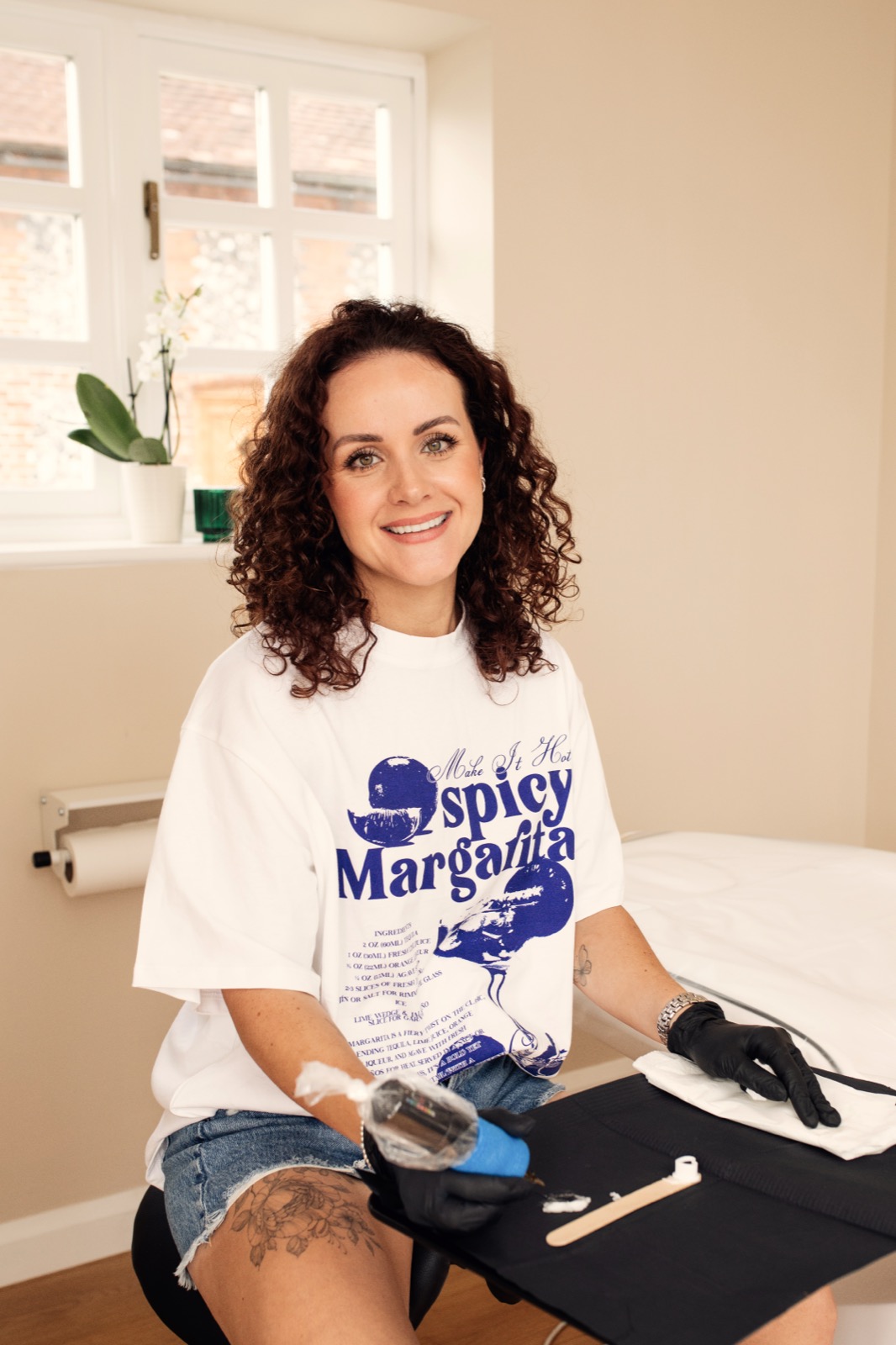
Kayleigh trained as a career change too
Petite Ink's founder didn't come from art school or a young apprenticeship. She spent fifteen years in the beauty industry first, bridal makeup, reception shifts, bar work, before training in fine line tattooing as a second career. She built her own studio from home, was fully booked within a year, and only then started teaching other women who were asking themselves the same question.
"My exact journey isn't what I'm promising you. But it's proof that ordinary women are capable of extraordinary things when they finally stop waiting for permission."
What you actually need to become a tattoo artist
- Proper training, not just a weekend of watching. Real time on practice skin, then supervised real models, before you tattoo a paying client alone.
- Accreditation and insurance. In the UK, ask whether a course is recognised by insurers and leads to a certificate, not just a school-issued one.
- Local council registration. Anyone tattooing for money in the UK registers with their local council and meets hygiene standards, whatever course they've done.
- A steady hand and patience. Not natural artistic talent. Line control and confidence are built through repetition, not born with.
- Support once you're qualified. The hardest stretch is usually the first few months of real clients, so ask what happens after the course ends, not just during it.
What about a traditional apprenticeship?
An old-school apprenticeship can still be a good route for the right person, and it isn't something to write off. But it's worth knowing what it actually asks of you before you count on it as the only way in: a studio has to be willing to take you on in the first place, which is hard to come by right now, and once you're in, it's often little to no pay for months, sometimes a year or more, with minimal actual tattooing time while you learn by watching and helping out. There's no guarantee of a paid job at the end of it either.
None of that makes an apprenticeship the wrong choice if you can find one and the time and money to see it through. It just means it isn't realistic for most people, and it shouldn't have to be the only door into the industry. Structured, accredited training exists to open that door to people an apprenticeship was never really built for: career-changers, parents, people without months of unpaid time to give.
How long it actually takes
On Petite Ink's Beginners Training, the structure is a pre-course online portal (hygiene, licensing, machine and needle theory, available as soon as you enrol), then four in-studio days: two days building the technique on practice skin, a live demonstration, then your first real models under direct guidance from day three onward. You leave with a full kit, a certificate, and ongoing support rather than a promise you're finished learning.
Kayleigh's own timeline, for context and not as a guarantee: she was fully booked three to four days a week within a year of starting. What happens after training depends on the person, but a career change into tattooing is measured in months of deliberate practice, not years of waiting to feel ready.